Economies of Enough
March 2026 • The Intentional Evolution Experiment
“The world has enough for everyone’s need, but not enough for everyone’s greed.”
— Mahatma Gandhi
The Year of Intentional Evolution continues with a question that moves from our bodies into the systems that shape how we live together:
What if the future of prosperity begins the moment we admit something simple? “Enough already.”
If January invited us to become conscious of how change unfolds, and February brought that awareness into embodiment, March turns toward the invisible architecture beneath everyday life: our economies, our measures of value, and the stories we tell about growth, success, and wellbeing.
For generations, prosperity has been defined by expansion (more production, more consumption, more accumulation). Yet across cultures, disciplines, and lived experience, a quiet realization is emerging: the story of endless growth is running out of plot.
This month’s theme, Economies of Enough, explores what becomes possible when we shift from extraction to regeneration, from scarcity and excess to balance, and from profit alone to dignity, care, and shared thriving.
Beyond the Logic of Endless Growth
Post-Capitalism
The dominant economic story of the modern era has been remarkably simple: growth equals progress. As long as markets expand and output increases, the future is assumed to improve.
But cracks in this narrative are widening. Ecological limits, widening inequality, and rising precarity reveal that perpetual accumulation cannot be the sole measure of wellbeing. Around the world, alternative models are emerging: cooperative ownership, commons-based governance, solidarity economies, and new forms of distributed value creation.
This is the push of the present moment: systems straining against their own assumptions.
The pull asks a deeper question:
What if prosperity is not something we chase, but something we cultivate together?
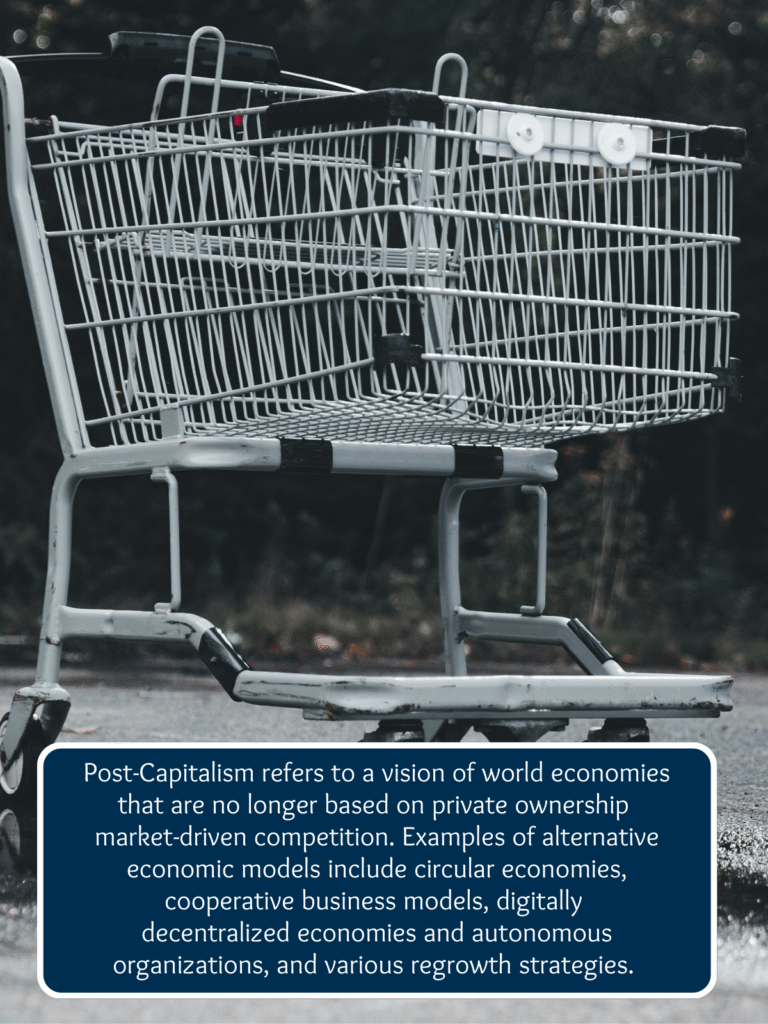
Post-capitalist thinking does not simply reject markets or innovation. Instead, it reframes value itself, centering relationships, resilience, and collective flourishing. In this light, intentional evolution becomes not an economic adjustment, but a civilizational reorientation.
Designing for Regeneration
Circular Economy
If post-capitalism challenges why we produce, the circular economy reimagines how.
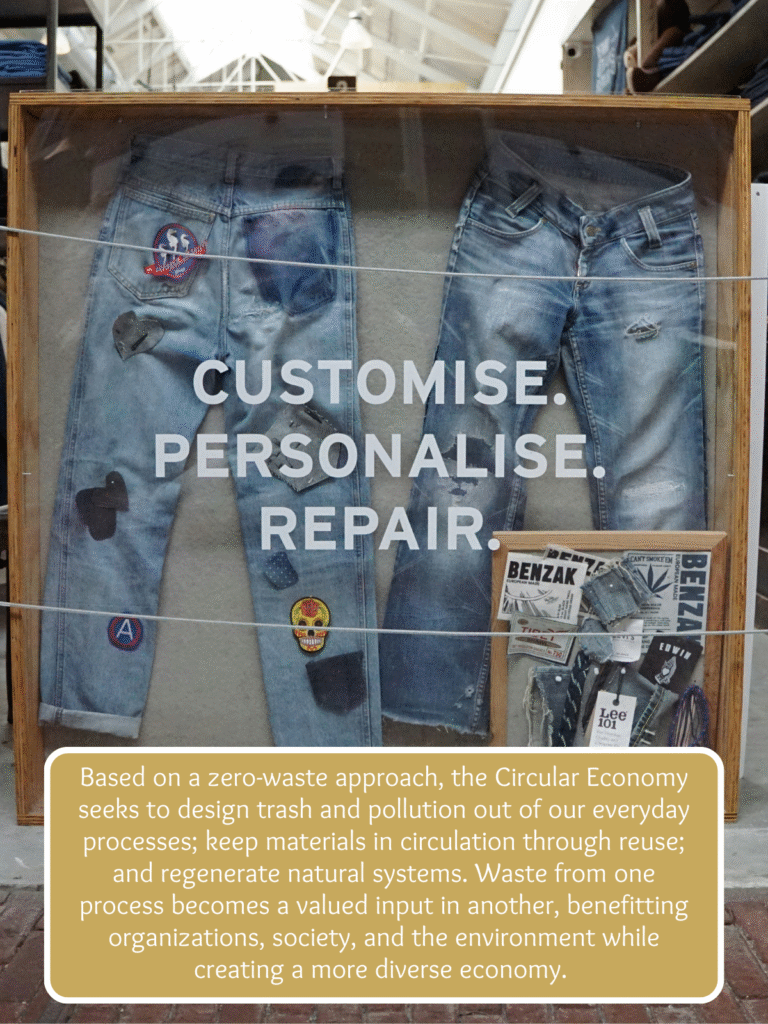
Linear systems extract, manufacture, consume, and discard, treating both materials and ecosystems as expendable. Circular thinking interrupts this pattern, designing for reuse, repair, renewal, and continuous flow. Waste becomes resource. Endings become beginnings.
This is more than an efficiency strategy. It is a philosophical shift from domination over nature to participation within it.
Intentional evolution recognizes that living systems do not grow forever; they grow, mature, and find balance. Circularity mirrors this biological wisdom, inviting economies to behave less like machines and more like ecosystems.
In doing so, it reframes sustainability from sacrifice to belonging.
From Consumption to Care
Universal Basic Services
If regeneration reshapes production, universal basic services transform the meaning of prosperity itself.
Rather than measuring wellbeing through purchasing power alone, this approach ensures shared access to life’s essentials: healthcare, housing, mobility, education, and digital connection. Security becomes collective rather than individual. Dignity becomes structural rather than conditional.
The push is practical: societies seeking stability in uncertain times.
The pull is profound:
What if freedom is not the ability to consume more, but the assurance that everyone can live well?
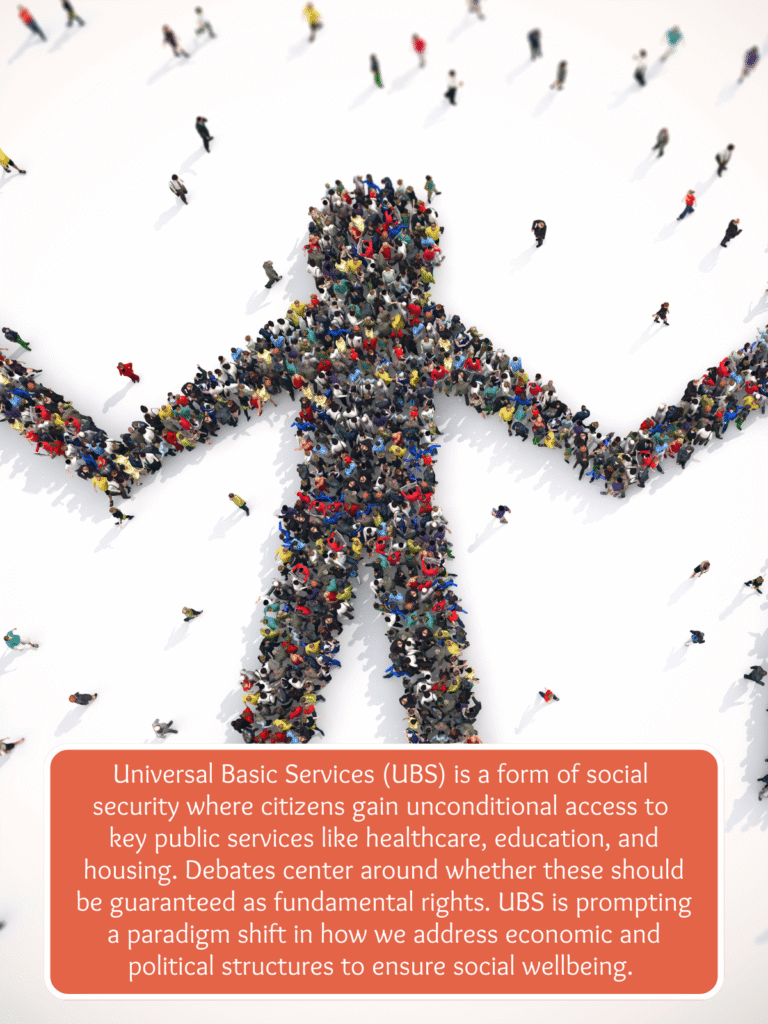
Universal basic services shift economics from transaction to relationship, from competition to care. They remind us that thriving is rarely an individual achievement; it is a shared condition created by the systems we build together.
Living Within Enough
Economies of Enough is not a story about limitation.
It is a story about liberation.
When growth is no longer the only horizon, new possibilities emerge: time reclaimed, relationships deepened, ecosystems restored, and meaning rediscovered beyond accumulation. Enough becomes not the end of ambition, but the beginning of wisdom.
Intentional evolution asks us to measure success differently: not by how much we extract, but by how well we sustain life—together.
The future of prosperity may not belong to those who have the most.
It may belong to those who learn, collectively, what is enough.
✳️ Join the Experiment
Experience The Age of Conscious Change with TFSX
🗓️ Livestream: The Evolution Happy Hour — March 26, 12 PM ET on my.TFSX.com
🎙️ Wicked Opportunities Podcast: The Intentional Spill — Weekly drops all month
🃏 Explore: The Intentional Evolution Trend Cards — Available at my.TFSX.com