Identity 2.0
October 2026 • The Intentional Evolution Experiment
“We know what we are, but know not what we may be.”
— William Shakespeare, Hamlet
The Year of Intentional Evolution has entered the laboratory.
And just in time for Halloween, we’re experimenting with something wonderfully strange:
Us.
Human identity has always evolved. We grow older, accumulate experiences, change our beliefs, move through different roles, and continually rewrite the stories we tell about ourselves. Yet emerging technologies are adding entirely new dimensions to that process. Our identities increasingly extend into databases and digital worlds. Our genetic information can be captured, stored, and analyzed. Advances in longevity may dramatically expand the amount of time we have to become someone else.
The boundaries of the self are getting slippery.
So October’s Identity 2.0 asks a question worthy of the season:
Who (or what) are we becoming?
As the Intentional Evolution Experiment explores identity through digital, biological, and ethical lenses, we encounter futures filled with digital doppelgängers, genetic archives, extended lifetimes, and increasingly persistent versions of ourselves.
Welcome to the identity lab. Things might get weird.
The Many Versions of You
Digital Identities
You already exist in more places than you can physically inhabit.
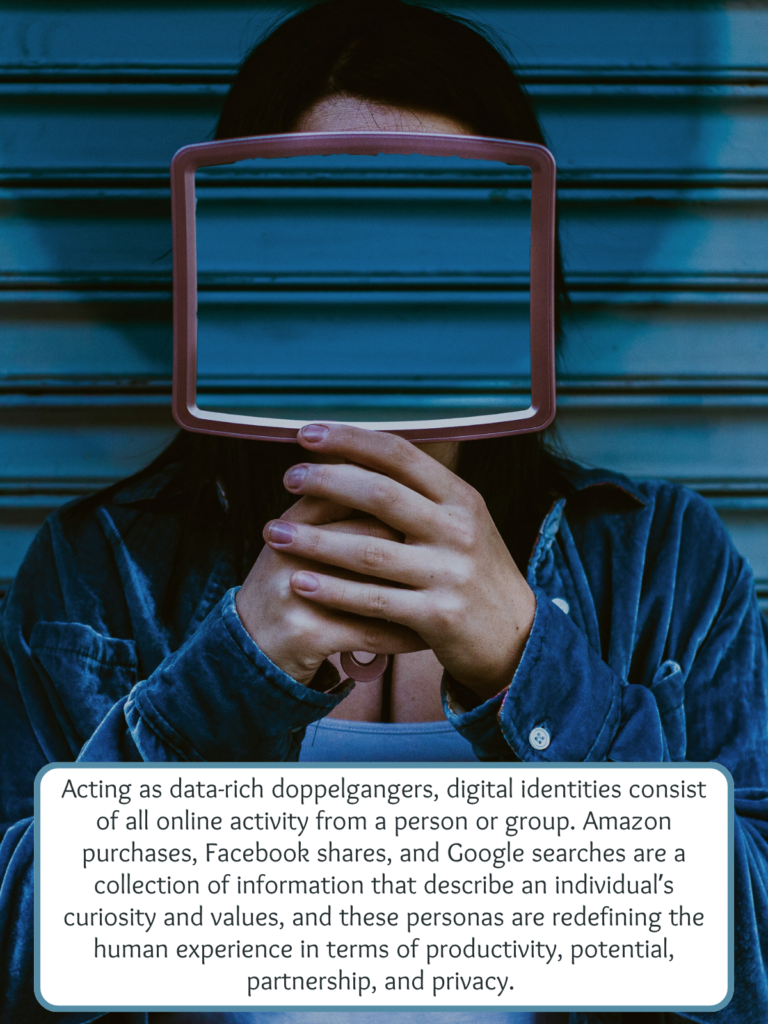
Profiles, credentials, purchasing histories, photographs, biometric records, avatars, algorithms, and countless other digital traces collectively represent pieces of who you are. Some are deliberately constructed. Others are generated through the simple act of moving through a connected world.
Digital Identities extend the self into an increasingly complex ecosystem of information.
As these systems become more sophisticated, identity can become portable across platforms, authenticated through biometrics, represented through avatars, and interpreted by algorithms. The digital self gains a kind of persistence and increasingly, consequence.
This raises a fascinating question:
How many versions of you can exist before the idea of a single identity begins to change?
Our physical and digital selves continually influence one another. A digital reputation can shape physical opportunities. An avatar can become a meaningful expression of identity. Data accumulated years ago can influence decisions made about someone today. Increasingly, who we are includes both the selves we create and the selves our data creates around us.
Through the lens of intentional evolution, Digital Identities invite us to consider how agency, authenticity, privacy, and belonging evolve when identity becomes distributed across worlds.
Your Biological Archive
DNA Banking
Few things feel more intimately ours than our DNA.
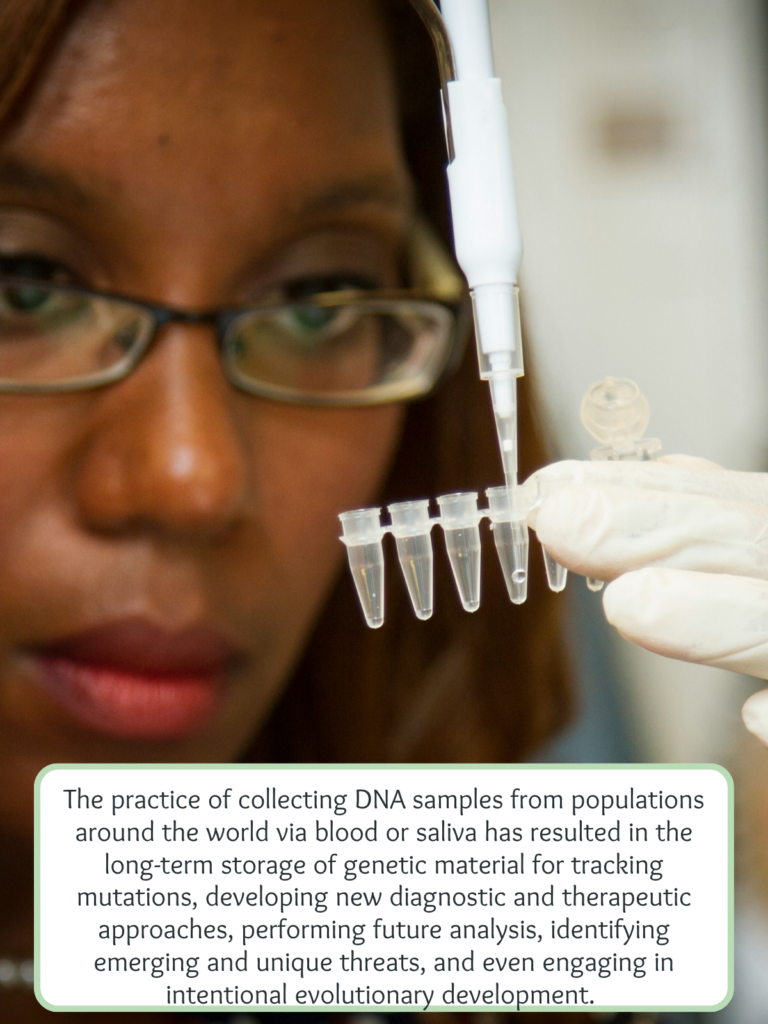
Yet genetic information can now be collected, sequenced, stored, analyzed, and preserved at unprecedented scale. Through medical research, ancestry services, biobanks, and other emerging applications, DNA is becoming both biological inheritance and information.
DNA Banking gives the past an extraordinary new kind of persistence. A biological sample collected today can reveal information about ancestry, health, relationships, and traits, even revealing entirely different things decades from now as science advances.
Our genetic identities also connect us to others. DNA carries information across families and generations, meaning the decision to store or share one person’s genetic information can have implications far beyond the individual.
Suddenly, the identity lab becomes a family affair.
What happens when the code that makes us biologically unique becomes part of a permanent information ecosystem?
DNA Banking asks us to expand familiar ideas about privacy, ownership, consent, and legacy. Who has access to genetic information? Who interprets it? What responsibilities accompany information that can persist across generations?
Intentional evolution brings those questions into the future before all of their answers have been written. Our growing ability to understand the biological self also expands our responsibility for how that knowledge is carried forward.
How Many Lives Fit Into One Lifetime?
Radical Life Extension
Now for October’s most vampire-adjacent possibility.
What happens if the human lifetime gets significantly longer?
Radical Life Extension explores advances that could dramatically increase human longevity, potentially altering one of the most fundamental boundaries around identity: time.
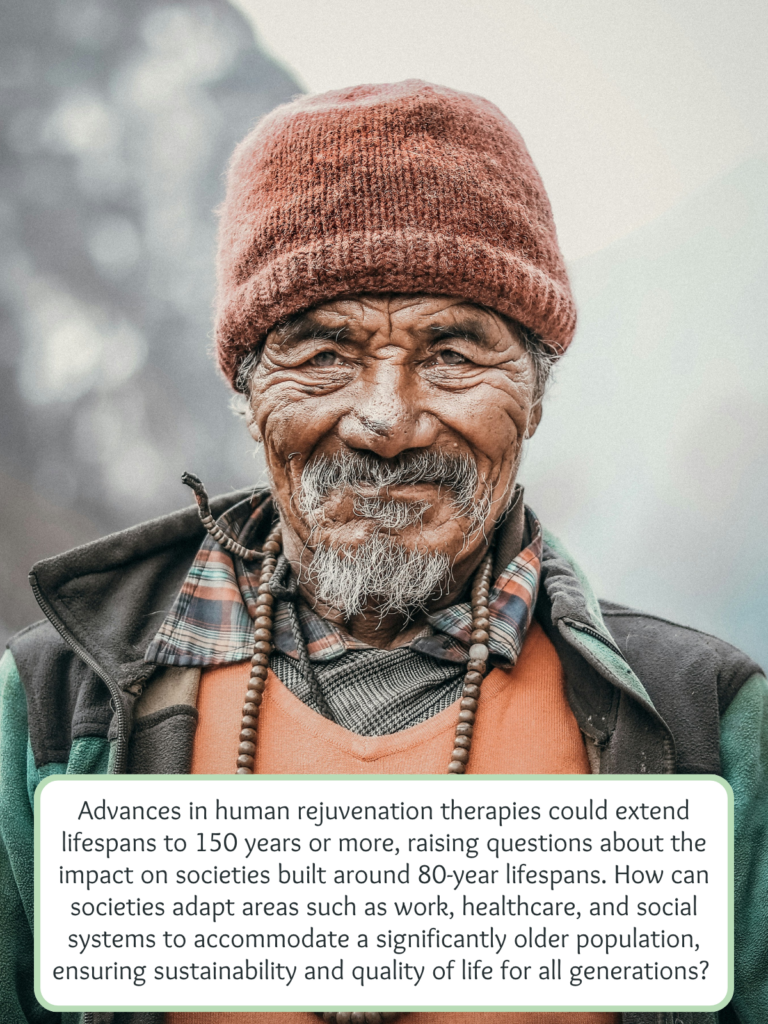
Imagine living long enough to pursue several careers, inhabit multiple communities, reinvent your beliefs repeatedly, or maintain relationships across a dramatically expanded number of generations. A longer life could reshape education, family structures, wealth, retirement, leadership, memory, and the pace at which people expect themselves to change.
It could also transform the very idea of a coherent self.
If you live to 150, how many different people might you become?
Identity already evolves throughout a lifetime. Extending that lifetime expands the landscape across which that evolution occurs. The person at 30 and the person at 130 might share a name and a biological history while experiencing the world through profoundly different identities.
Through the Intentional Evolution lens, Radical Life Extension becomes more than a question of how long humans can live. It asks what we might do with more time to learn, change, create, relate, and become.
Immortality may remain the stuff of Halloween legends. The possibility of longer human lives already gives us plenty to think about.
The Ghost in the Data
Identity 2.0 brings these three trends together around a question humans have wrestled with for centuries: what makes a person the same person over time?
Our answers are becoming more complicated. Digital identities allow versions of ourselves to exist across platforms and persist through data. DNA Banking preserves biological information that connects us backward and forward through generations. Radical Life Extension could stretch a single identity across a much longer arc of transformation.
Together, they suggest that identity may increasingly operate less like a fixed portrait and more like a living constellation – biological, digital, relational, historical, and continually evolving.
That makes October’s exploration especially relevant to the Intentional Evolution Experiment. As our capacity to shape, preserve, extend, and represent ourselves grows, we also gain greater responsibility for deciding what kinds of selves (and what ideas of personhood) we carry into the future.
The technology will continue to evolve. So will we.
The interesting part is what happens in between: the choices we make about privacy and persistence, authenticity and reinvention, inheritance and agency, longevity and meaning.
Perhaps Identity 2.0 is already loading.
The question is what we want to become when it arrives.
✳️ Join the Experiment
Enter the Identity 2.0 lab with TFSX throughout October:
🗓️ Livestream: The Evolution Happy Hour Halloween Edition! October 29 @ 12 PM ET on my.TFSX.com
🎙️ Wicked Opportunities Podcast: The Intentional Spill — Weekly drops all month
🃏 Explore: The Intentional Evolution Trend Cards — Available at my.TFSX.com
This Halloween, the strangest emerging technology might be us. 👻