Civic Evolution
November 2026 • The Intentional Evolution Experiment
🏛️ Democracy upgraded. Systems that serve the whole.
Who Gets to Write the Rules?
What if democracy is one of humanity’s greatest unfinished experiments?
We’ve spent centuries developing systems to organize collective life, distribute authority, establish rights, and negotiate the responsibilities we have to one another. These arrangements reflect the values, technologies, and assumptions of the societies that created them. And as those societies evolve, the question of how we govern ourselves becomes increasingly interesting.
Our capacity to connect, collaborate, and organize has expanded dramatically. We can coordinate across continents, create communities independent of geography, and participate in networks that transcend traditional institutional boundaries. Yet many of our civic structures still reflect an era when participation depended on physical proximity, authority flowed through established hierarchies, and governance was largely something exercised on our behalf.
What might become possible if the systems organizing collective life evolved alongside the people they serve?
November’s Civic Evolution theme brings the Intentional Evolution Experiment into the architecture of our shared existence. It invites us to consider how autonomy, stewardship, and belonging might inform more participatory, adaptive, and regenerative approaches to civic life.
Three emerging trends help us explore this possibility, each challenging a different assumption about how we live together.
The Commons Beyond Our Borders
Space Commons
Humanity has a remarkable talent for drawing lines around things.
Land, water, knowledge, resources, and even ideas have been divided, claimed, traded, and governed through systems of ownership that shape our relationships with one another and the world around us.
Now, as human activity extends beyond Earth, we’re encountering questions that challenge the boundaries of those familiar arrangements.
Space Commons explores the emerging possibilities and tensions surrounding shared access, stewardship, and governance of extraterrestrial spaces and resources. Who has the authority to make decisions about places that belong to no single nation? How should the benefits of exploration and development be distributed? What responsibilities do we have to future generations when making decisions about places we’ve barely begun to understand?
These questions also illuminate the assumptions we carry into every new frontier.
Will we extend familiar models of extraction, competition, and territorial control into space? Could the challenge of governing shared resources beyond Earth inspire new approaches to cooperation, reciprocity, and collective responsibility here at home?
What if the greatest discovery awaiting us in space is a better way to share what we have?
Through the lens of intentional evolution, Space Commons invites us to reconsider what ownership means when the scale of our shared interests exceeds the boundaries of any individual institution or nation.

The Freedom to Organize Differently
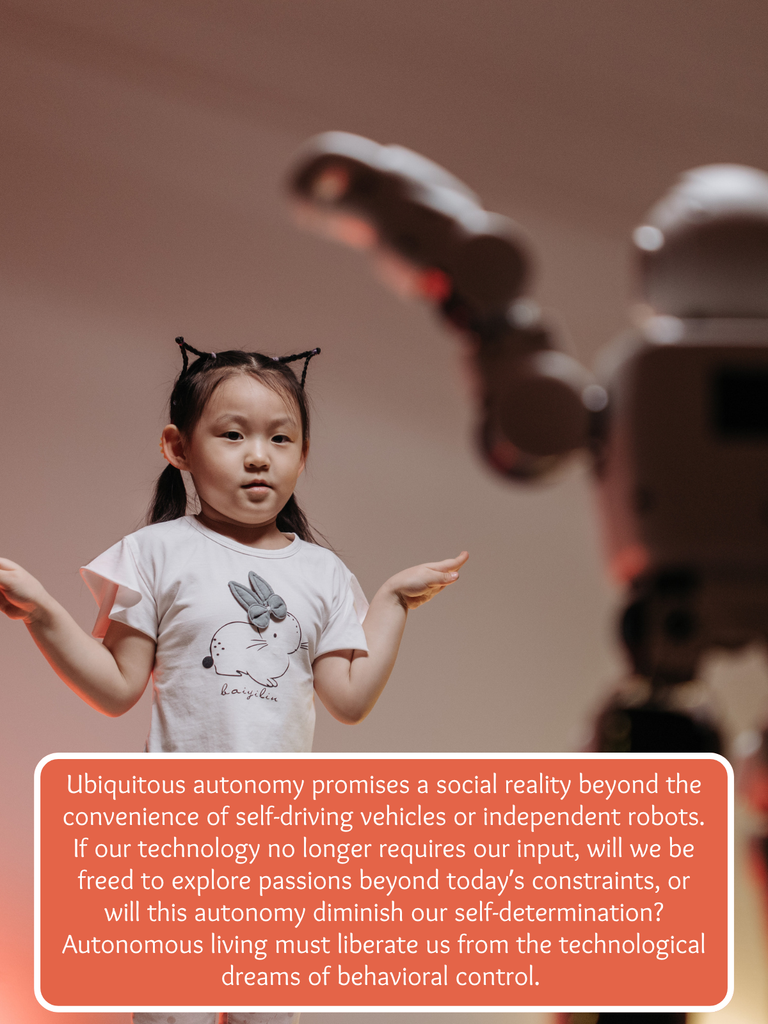
Autonomous Living
Throughout history, our relationships with institutions have been shaped by the systems we depend upon for energy, food, housing, information, security, and other essentials of daily life.
Emerging technologies and changing social expectations are opening possibilities for greater self-sufficiency, distributed resources, and more locally determined ways of living.
Autonomous Living explores how individuals and communities might gain greater agency over the systems supporting their lives. From decentralized energy and community-scale infrastructure to alternative living arrangements and cooperative models of resource management, autonomy is becoming an increasingly compelling civic proposition.
But autonomy introduces a fascinating paradox.
Greater independence can expand our freedom to choose how we live, while the systems that make that independence possible often rely on extraordinary levels of cooperation, shared knowledge, and collective investment.
A community generating its own energy still participates in larger ecological and technological networks. A household producing more of its own food remains connected to broader systems of land stewardship, biodiversity, and exchange.
What if greater autonomy could deepen our understanding of interdependence?
Civic evolution invites us to explore how distributed agency might transform the relationship between individuals, communities, and institutions. As people gain more capacity to shape the systems supporting their lives, the possibilities for participation, accountability, and shared responsibility may evolve as well.
Where Democracy Comes to Life
Third Spaces
Think about the places where you’ve experienced a genuine sense of community.
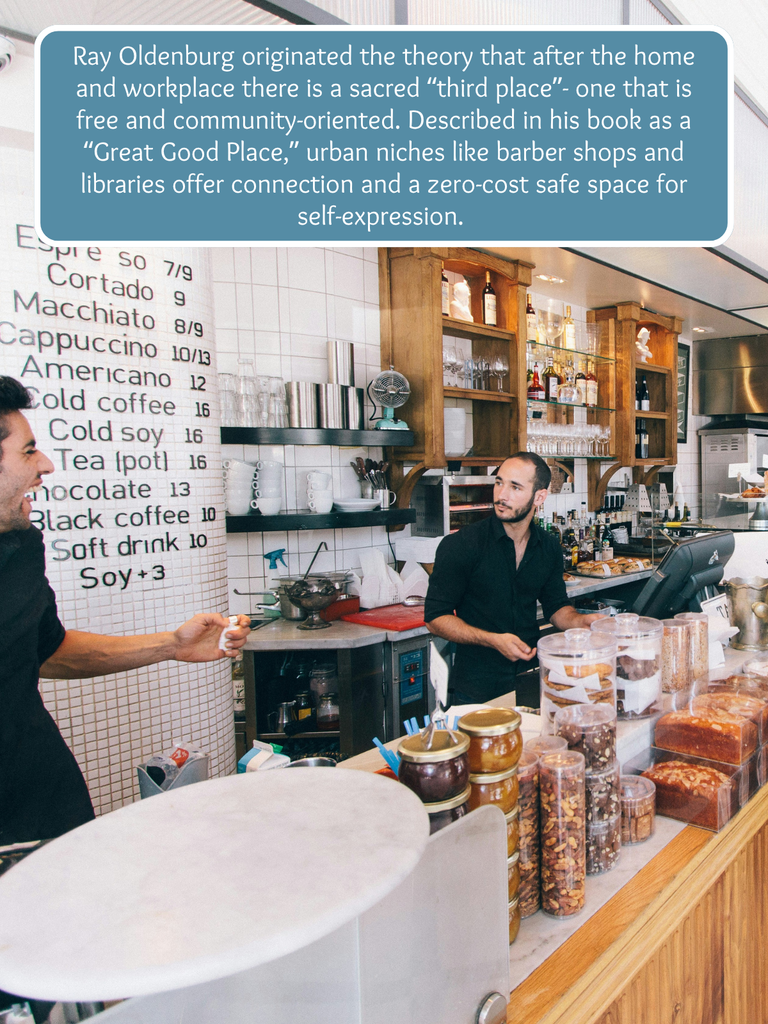
Perhaps it was a neighborhood café, a public library, a park, a community garden, or an informal gathering place where people came together without needing a particular reason to be there.
These spaces play an often-underappreciated role in the social fabric.
Third Spaces are gathering places beyond home and work where relationships form, ideas circulate, and people encounter perspectives and experiences outside their immediate circles.
They provide opportunities to build the trust, familiarity, and sense of belonging that make collective action possible.
As our lives become increasingly mediated by digital platforms, and as economic pressures reshape public and communal spaces, the future of these gathering places takes on new significance.
What happens to civic participation when opportunities for spontaneous connection diminish? How might new forms of physical and digital gathering strengthen our capacity to collaborate across differences?
And perhaps most importantly, what kinds of spaces help us recognize ourselves as participants in a shared future?
Third Spaces remind us that civic life is experienced through everyday relationships as much as through formal institutions. The capacity to govern ourselves collectively depends, in part, on our willingness and ability to encounter one another as members of a community.
Democracy comes alive wherever people gather to imagine, negotiate, and create something together.
The Architecture of Collective Thriving
Together, these three trends reveal a compelling possibility for civic evolution.
Space Commons expands our understanding of shared stewardship beyond familiar boundaries. Autonomous Living challenges the distribution of agency within the systems supporting daily life. Third Spaces illuminate the relationships and shared experiences that make participation meaningful.
They also reveal how deeply autonomy and interdependence are intertwined.
Our capacity for self-determination grows through access to resources, knowledge, and relationships that connect us to others. Our ability to thrive collectively depends on civic arrangements that recognize individual agency while cultivating shared responsibility.
This tension may be one of the most important design challenges of our time.
As the Intentional Evolution Experiment moves into the realm of civic life, we have an opportunity to examine the assumptions embedded in the systems we’ve inherited. Who participates in shaping them? Whose interests do they serve? How do they respond when circumstances change? What would it mean for governance to become more responsive to the living relationships and communities it is meant to support?
Democracy, like every human invention, carries the possibility of continued evolution.
And perhaps the most transformative civic innovation will emerge from recognizing that governance is something we participate in creating every day, through the ways we share resources, exercise agency, cultivate belonging, and take responsibility for our collective future.
What might become possible if we designed our civic systems with the same capacity for learning, adaptation, and transformation that we recognize in life itself?
✳️ Join the Experiment
Continue exploring Civic Evolution with TFSX throughout November.
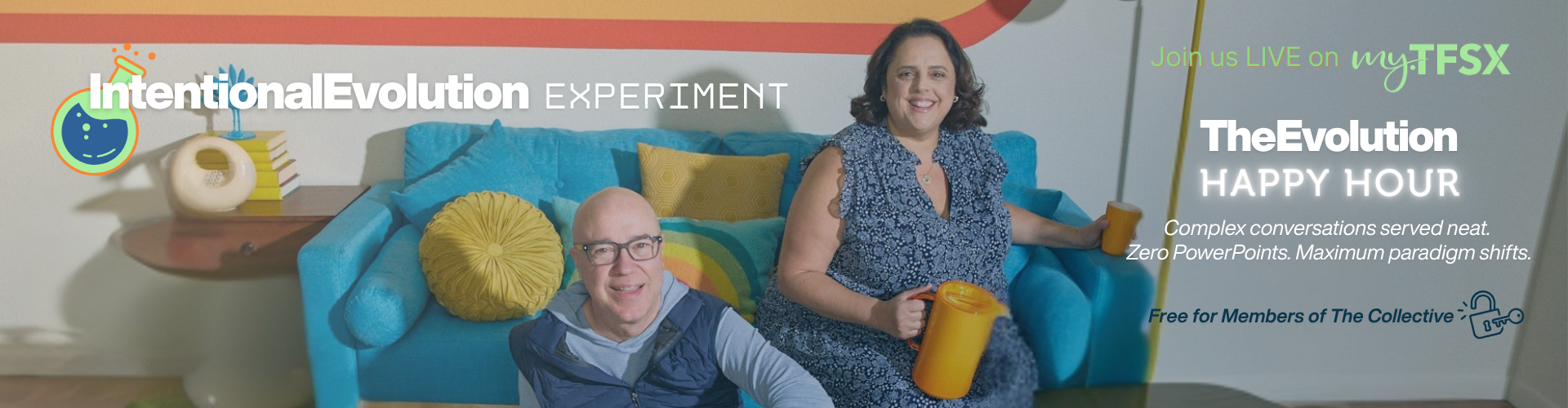
🗓️ Livestream: The Evolution Happy Hour – November 19 at 12 PM ET on my.TFSX.com
🎙️ Wicked Opportunities Podcast: The Intentional Spill — Weekly drops all month
🃏 Explore: The Intentional Evolution and Creator Economy 2.0 Trend Cards — Available at my.TFSX.com
The future of democracy is still being written. The question is who gets to hold the pen. 🏛️