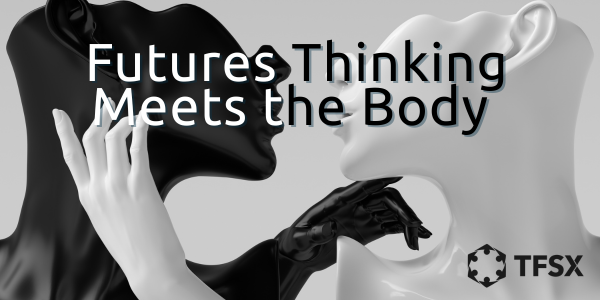
Is Embodiment the Missing Piece in Foresight?

What if futures work didn’t begin with data, trends, or models—but with the body?
Much of strategic foresight has been shaped by rational analysis: signals, patterns, scenarios, and frameworks designed to help us make sense of complexity. These tools matter. But they are incomplete on their own.
In this Creating Foresight-Fueled Action (CFFA) conversation, Frank Spencer is joined by Julienne DeVita and Lourdes Rodriguez to explore an emerging and deeply human approach to futures practice: embodied foresight.
Rather than asking What do we think about the future?, this work begins with a different question:
What does the future feel like in the body?
Beyond the Head: Expanding How We Know
Embodied foresight invites sensation, emotion, movement, and presence into the futures process. It treats the body not as something to manage or override, but as a source of insight, one that is constantly sensing, responding, and relating to change.
As Julienne and Lourdes share, embodiment includes:
- Sensory awareness (seeing, touching, hearing, tasting, smelling)
- Kinesthetic experience (stillness, posture, gesture, movement)
- Affective intelligence (emotions such as fear, grief, excitement, or hope)
These dimensions shape decision-making whether we acknowledge them or not. Embodied foresight makes them visible, workable, and collectively accessible.
The Present Moment as a Strategic Lens
A key theme in the conversation is presence. To embody something, we must be in the here and now.
By anchoring attention in the present moment, embodied foresight creates a bridge across time (connecting lived experience from the past with emerging possibilities for the future). This “transtemporal” orientation allows practitioners to sense what wants to emerge, rather than forcing premature conclusions.
It also challenges a familiar pace in futures work. Slowing down is not a retreat from strategy; it is often what allows deeper insight to surface.
From Individual Bodies to the Social Body
Embodied foresight is not only personal. It is relational.
Through practices such as movement-based sensemaking and Social Presencing Theater, individual experiences become part of a shared, collective awareness. Groups begin to function as a social body, revealing emotional undercurrents and shared assumptions that shape strategy, culture, and action.
When practiced intentionally, these methods expand how teams:
- Make sense of uncertainty
- Surface unspoken dynamics
- Navigate fear, possibility, and agency together
Why This Matters Now
As technologies accelerate and generative systems take on more analytical tasks, human capacities like sensing, relating, and embodied awareness become even more critical.
Embodied foresight reminds us that futures work is not only about anticipating change—but about reclaiming our agency, humanity, and capacity to respond with care and intelligence.
It also opens new possibilities for education, leadership, and systems change by reconnecting futures thinking with lived experience.
Watch the Full Conversation
This conversation offers both conceptual grounding and practical insight into how embodied approaches can enrich futures practice across contexts—from organizations and communities to education and design.
👉 Watch the full Creating Foresight-Fueled Action conversation on Embodied Futures below.
Julienne DeVita is a designer-turned-futures consultant after gaining a front row seat to the often catastrophic results of short-term thinking and consumption. As a design futures practitioner and founder of Liminal, she blends strategic foresight, systems thinking, and design methodologies to develop strategies 5+ years into the future. She has worked with organizations including the OECD, Enterprise, EY, the City of Houston and Autodesk (among others). As an adjunct professor at Parsons School of Design, Julienne teaches courses spanning AI, design, and foresight to undergraduate and adult learners. Her research has been presented at conferences globally and explores the intersection of creativity, technology, and long-term thinking. In 2024-25, she was awarded a research grant to create an AI Design Ethics Toolkit, and has published multiple peer-reviewed papers on the topic. Julienne is the co-founder of the Embodied Futures Collective, a community of foresight practitioners studying change through movement, togetherness, and presence. She also serves as chapter lead for the NYC arm of Futures Friends.
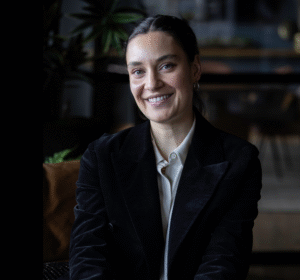
With a background in Psychology, Lourdes combines her professional activity as a senior foresight consultant with her lecturing work, facilitating workshops and seminars to executives, organizations and public bodies around the world, for more than 15 years. Recognised as one of the best futurists in Spain by Forbes magazine (2021, 2022), Lourdes works as Co-Executive Director at Teach the Future, promoting the inclusion of futures thinking into education. At the same time, as a foresight consultant, among other projects, she works as Foresight expert as part of Mindset, a boutique consultancy specialized in designing innovative learning experiences, and as an external expert for project at the European Commission. Lourdes is Director of Advocacy, Policy, and PR at Teach The Future, and was named one of the 40 best futurist in Spain by Forbes.